What do you do when you find yourself stuck in the middle of a fierce race, unknowingly backsliding to the tail end as fresh entrants blitz past?
Do you give up, sprint faster or try high jumps to leapfrog the pack?
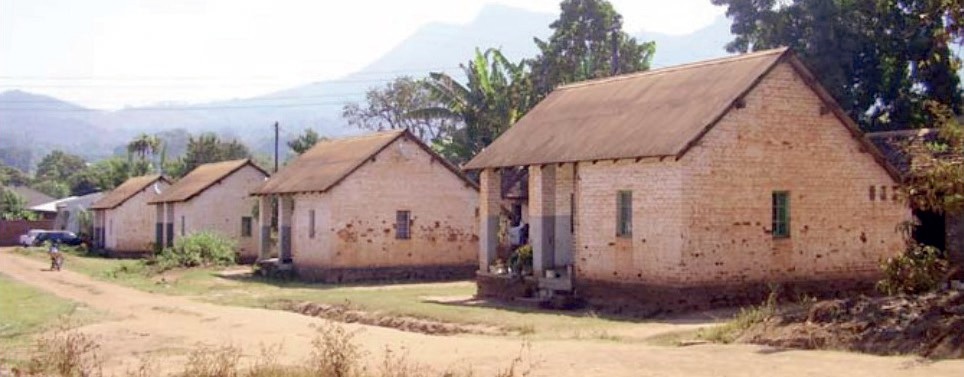
Thousands of Malawians return to undesirable homes despite the Malawi Housing Corporation (MHC) mission to provide decent and affordable housing for the nation.
The go-slow is unmistakable in the rusty roofs of its ancient houses and misspelling of decent as ‘descent’ on its official website, www. mhc.mw.
The typo ruining its mandate online tells a bigger story about its descent into losses and debts that have more than halved the houses owned by the company.
No housing for baby boom
Lawmakers established MHC in 1964 when Malawi was home to nearly four million people, but its chief executive officer Bob Chimkango recently told parliamentarians that the corporation’s property has shrunk from 15 000 to 6 422 housing units since 1994, with just 218 additions in six years.
Meanwhile, the demand for decent housing keeps spiking as the population of 22 million welcomes a new baby every 55 minutes.
The alarm bells toll alongside jingle bells every Christmas when healthcare authorities publicly account for every newborn, unlike any day beyond the official birthday of Jesus Christ.
The Ministry of Health and Sanitation counted 1 772 babies last Christmas, up from 1 487 in 2024 and 1 462 in 2023.
The December 25 tallies totalled 1 628 in 2022 and about 1 480 in 2021.
They debunk daily additions to the country’s population boom, estimated at 2.8 percent annually based on the 2018 census.
“What happens [in maternity wards on Christmas can happen on any other day,” health rights activist George Jobe told The Nation.
However, authorities stutter when asked: Where are the basics for the newborns to enjoy a quality life?
Unsettlingly, the newest Christmas babies arrived amid the country’s worst hunger in seven years, when four million Malawians required urgent food aid.
However, nearly two in five of these newborns checked into decent homes.

UN-Habitat bills 59 percent of houses in the country as substandard.
According to the United Nations agency that champions inclusive human settlements, 50 to 80 percent of urban Malawians live in informal settlements due to a lack of affordable housing.
This exposes MHC’s descent from its mounting mandate to develop plots, build houses and keep them in shape.
In 2016, lawmakers revised the MHC Act, transforming the State-owned social housing enterprise into a commercial business required to pay dividends to the Treasury.
From Chimkango’s revelations, the corporation has constructed just enough houses for babies born two to three days at Bwaila Hospital in Lilongwe, which welcomes 80 daily.
“While MHC has 6 422 housing units, the number was lower in 2020. We had a project where we built 218 houses,” he told Parliament’s Public Accounts Committee recently.
Ordinary citizens jostle for about half of its property, but the lucky few scarcely vacate its antiquated houses, often leaving them to their relatives and contacts.
The author filled out application forms in 2009, but lost count of follow-ups and received no update as the waitlist kept lengthening with no vacant house in sight.
By 2012, MHC officials said they could no longer trace the name in grey text.
Chimkango unpacked the dizzying shortlist: “We have at our disposal just about 3 200 units against a waiting list of over 100 000.
“More keep coming, filling forms and paying fees, saying: ‘When it is available, consider me.’ People who applied in 1998 still come to follow up… We tell them that we have no [vacant] houses, but there is hope that houses will be available.”
This proclaims Malawi’s “housing poverty “, according to UN-Habitat.
“The country needs 21 000 new units every year for 10 years to meet housing demand—this far exceeds supply,” it reports.
In their speeches, policymakers envision transforming Malawi into an inclusive, industrialised, upper-middle-income economy by 2063. The Malawi 2063 development blueprint targets reducing urban slum dwellers to 10 percent by the centenary of self-rule.
However, Section 13 of the Constitution says the yardstick of government policy is the quality of life in rural areas, where MHC’s houses remain few and far apart.
Cashflow issues
Chimkango cites “cash flow problems” for MHC’s struggles.
The corporation last made a profit in 2019, mainly due to its shrinking estate and high cost of construction materials, he says.
“We have the obligation to maintain the units, but we are required to keep the rentals as low as possible to accommodate an average Malawian. With this, it is hard to catch up or break even,” the lawyer crunches unenviable economics.
Meanwhile, government has approved a 30 percent hike in rentals to cut losses.
The loss has hit K6.5 billion in the past five years and it is projected to hit K1.9 billion this year.